

To refresh wavy hair in the morning, check three places separately: the waves beside your face, the side you slept on and the last few inches of the ends. Leave the parts you like alone. Lightly dampen one section that has lost its shape, support its existing curve with an open hand and let it dry before deciding whether it needs product. A small refresh is easier to judge when you change one area at a time.
Yesterday's waves do not have to look identical from side to side for the whole hairstyle to feel considered. You might need a clearer front while the back is already comfortable, or a little shape at the ends without extra height on top. This guide helps you choose the smallest useful task, carry it out gently and know when to stop. It is a practical routine for your existing natural waves between your normal wash days.
Choose where to refresh wavy hair before adding anything
Let your hair fall free and look at it from a little distance. Find the area that would make the biggest difference to your morning if it sat differently. Is one front wave crossing your eye? Has one side become a broad flat panel? Are only the ends pointing away from the rest? Name that specific change instead of treating every loose strand as another job.
Separate the three zones with your hands without combing through the whole hairstyle. Lift the front lengths away briefly, then look at the side and ends independently. You may discover that most of the pattern is still there underneath a few displaced pieces. Keep those intact groups together. Repeatedly running your fingers through the finished lengths can make the comparison harder by changing the areas that were already working.
Pick one zone to begin with and leave a second as optional. Decide how much time you have for damp hair to dry before leaving. A small front adjustment and a side tuck may suit a short morning better than wetting every length.
Zone one is the wave beside your face
Hold the front wave loosely in an open palm and notice its direction. If the shape is present but sitting too far forward, first place the whole group slightly to the side. Let go and look down as you would when reading. A comfortable movement of the existing wave may be enough. You do not need to split it into several smaller strands just to make the curve look more defined.
If the front group has become stretched or irregular, lightly dampen your hands or mist that small length, keeping the face clear. Guide the group along its existing bend and support the ends from below. Release gently. The motion should leave room for the wave to form rather than pulling the hair straight while you smooth it. Check that neighboring waves have not been caught into the section unnecessarily.
Keep the hairline and longer front wave as separate jobs. A natural part that sits comfortably does not need to be redrawn just because the ends beside the cheek need attention. Once the section is arranged, stop touching it while it dries. Put on your glasses if you wear them and make sure the final position will be comfortable around the arms and the ear.
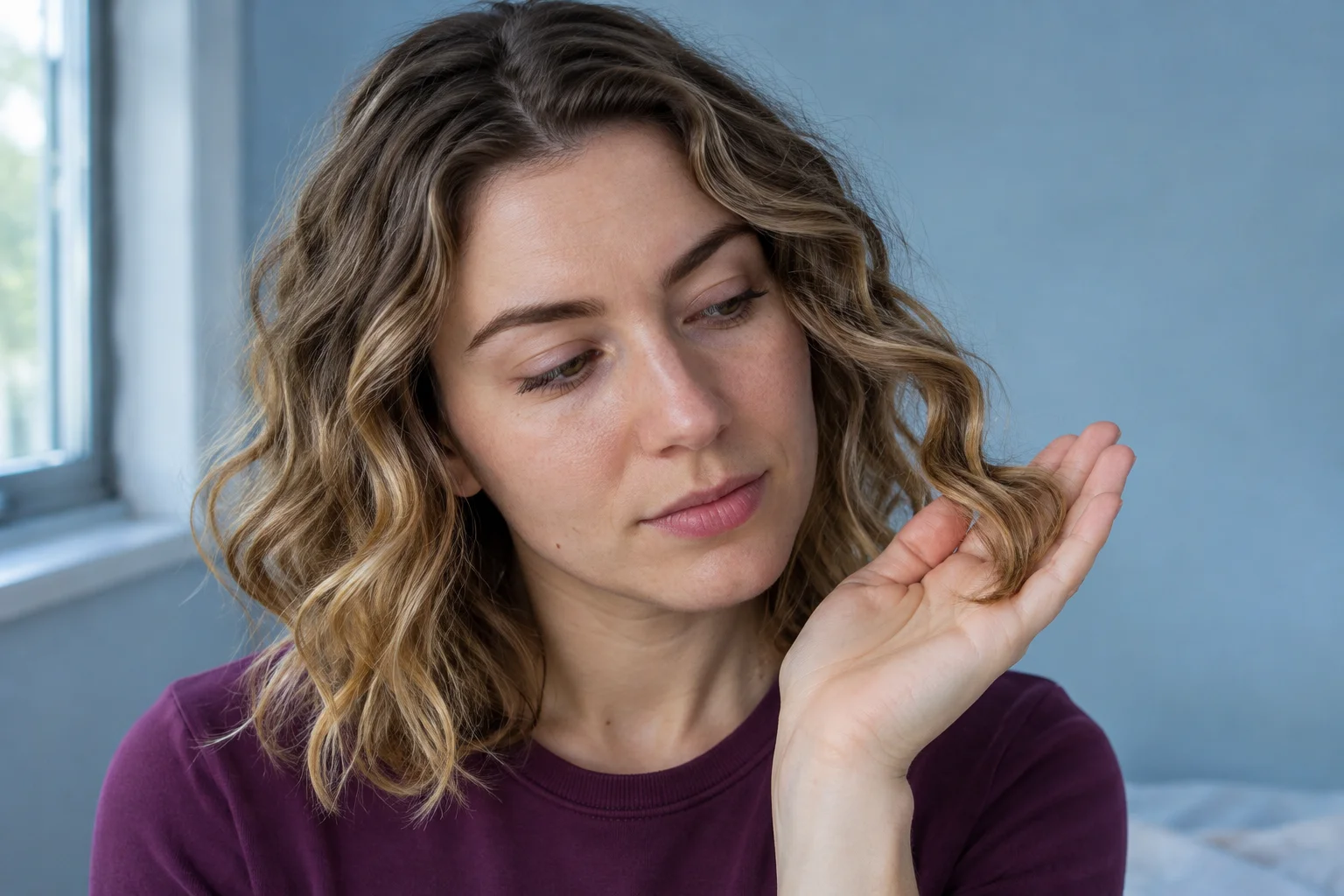
Zone two is the side that has gone flat
Move the front out of the way and lift the side lengths gently from underneath. Look for an intact wave above or below the flattened patch. Use its direction as a guide instead of forcing the entire side into a new pattern. Treat a small section first, so you can see how much moisture and handling your own hair needs before involving the surrounding lengths.
Lightly mist that section, or press it between damp palms if that gives you more control. It should be easy to work with without dripping onto your clothes. Cup the ends and move them upwards softly, then let the hair fall. Avoid repeatedly squeezing the same section harder in the hope of creating a tighter curl. The aim is a relaxed wave that belongs with the rest of your hair.
Curlsmith's wavy-hair guide describes a light water mist and a small amount of styling product as refresh options. Use that as a starting principle, not an instruction to keep adding both. Wait to see the treated section once dry. If the wave looks comfortable with water and gentle shaping alone, the next product step may simply be unnecessary for that area today.
Curlsmith on refreshing natural waves
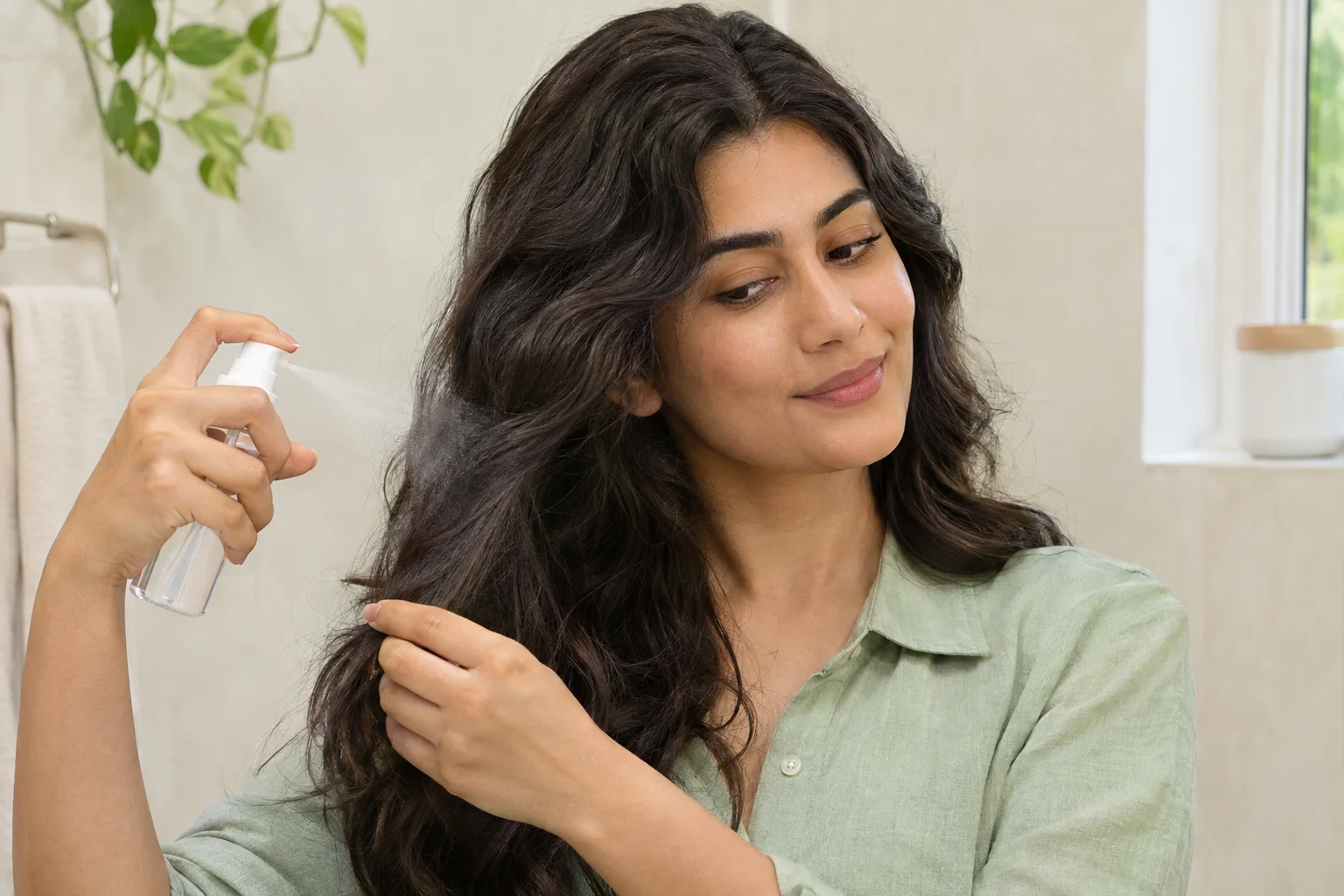
Zone three is the last few inches
The ends can lose their curve while the middle still looks good. Support only the lower part in your palm and see where the shape starts to change. If you gather the entire length into your hand, it becomes harder to identify whether you are refreshing the tips or disturbing the wave above them. Work on the small bottom group that actually needs the adjustment.
With lightly dampened hands, guide those ends upwards into their existing wave. Release without stretching them back down. A loose open hand gives you more control than a tight fist around the hair. If the ends catch together, separate them gently as needed rather than pulling through the snag. A refresh should remain comfortable, and a section does not need to be forced into a perfect repeated curve.
Judge the ends with the whole outline visible against your top. You may prefer a mixture of softly curved and straighter pieces to a uniformly curled finish. If just one end turns awkwardly, work on that piece rather than repeatedly wetting the entire side. Stop once the lower edge feels connected enough to wear, even if it does not copy the stronger pattern higher up.

Give product one specific job
Before adding a styler, decide what it should do for the section you have chosen. You might want a little more hold after the wave dries, or a softer grouping of loose lengths. Use a product you already know suits your hair, follow its instructions and start with a small suitable amount. A cream, mousse, gel and refresh spray do not all have the same application method.
Spread the chosen amount between your hands as directed and apply it to the target lengths rather than automatically coating the roots and back. Keep a clear boundary between the treated and untouched areas. If you cannot tell what has already been applied, pause instead of adding another layer. A short routine becomes easier to repeat when you know which area received which step.
Avoid mixing a storage bottle of improvised diluted products for this routine. You can use a water mist separately and follow your styler's own directions at the time of application. If the hair already feels heavily coated or you want a fresh wash, use your normal washing routine rather than insisting on another refresh. There is no requirement to extend a style for a particular number of days.
Let the small section dry before judging it
A damp wave supported by your hand is not yet the finished shape. Release the section and give it time to dry without repeated squeezing, brushing or moving it between the front and back of the shoulders. Keep the rest of your morning going while leaving that small area alone.
If you use a diffuser, follow the appliance and relevant product instructions, choose a gentle comfortable setting and avoid pressing hot parts against your skin. Work on the section you actually dampened rather than automatically drying the whole head. If you prefer air drying, choose a smaller refresh area on days when you need to leave sooner. The amount of hair you rewet should fit the time available.
Once dry, look at the wave with your hands away. Turn your head and let the lengths settle. Check whether the part you wanted to improve now feels easier to wear. A little asymmetry can remain without needing another round of styling. If you want a different result next time, note one change to make rather than starting a second full routine immediately.
Use a soft placement change when you are done
Sometimes the wave is fine but its position is inconvenient. Try moving one side behind the shoulder, using a relaxed ear tuck or bringing a little of the back length forward. Those changes redistribute the shape without adding moisture or product. Keep the arrangement gentle so the refreshed section can retain its own movement instead of being stretched into a tight sweep.
If you need the front held away for a task, choose a small comfortable fastening or a loose gathering that suits your actual length. That is a separate practical choice from redefining the waves. The guide to keeping loose hair away from your face gives more specific anchor options. You can use one briefly for work and still enjoy the loose texture through the rest of the lengths.
Check the arrangement while looking down, putting on glasses or moving into the jacket you will wear. If a section only behaves while you hold your head still, simplify its placement. For a later change of plans, the day-to-night styling guide offers ways to rearrange existing texture. Today's refresh can stay small; it does not need to become an entirely different hairstyle.
Keeping loose hair away from your face · Moving an existing hairstyle from day to evening

Keep the next morning simpler
Remember which zone made a visible difference and which step you could have left out. You may find that the front needs a little water while the side only needs repositioning, or that the ends settle well once you stop touching them. A short note in your own words is enough.
At your next normal wash, notice how the initial finish relates to the following morning. Consider where you place the lengths while drying and how much styler you use, without changing several things at once. If one area repeatedly needs the same small adjustment, make that your first morning check. Leave the more reliable areas outside the routine unless they genuinely need attention.
Keep a comfortable fallback for mornings when you would rather not refresh. A soft tuck, a relaxed half-up or simply wearing a looser wave can fit the same haircut. The useful outcome is a choice you can make calmly: one small section, a simple rearrangement or your normal wash. Let the amount of work follow the day you have, rather than the other way around.
Questions
Do I have to wet all my hair to refresh the waves?
Start with the one area that needs attention. A front group, a flattened side or the ends may be enough. Keep the rest dry if you like its shape. Judge the treated area after it dries before deciding whether a second section needs work.
Should I brush through the waves first?
If you want to keep the existing groups, begin by moving them gently as whole sections. Deal with any tangles carefully using your usual suitable detangling method. Do not pull through a snag just to finish the refresh quickly. A complete brush-through changes more of the pattern.
Why does the wet section look better than the dry result?
Your hand, moisture and product may be temporarily holding it in a different shape. Wait until it is dry and released before evaluating it. On the next attempt, change one detail, such as using a smaller section or less product, so you can understand the difference.
Is a softer wave an unfinished hairstyle?
No. A relaxed wave can look intentional when its placement is comfortable and the overall outline feels connected. Decide whether you want definition, a clearer front or simply a calmer side. You can stop when that particular job is done without making every strand identical.